Invited Speakers
Distinguished researchers and experts joining IPTA 2026

María Gloria Bueno García
Full Professor
Universidad de Castilla-La Mancha (UCLM), Spain
Vision and Intelligent Systems Laboratory (VISILAB)
Biography
María Gloria Bueno García is a Full Professor at the Universidad de Castilla-La Mancha (UCLM), Spain, and leads the Vision and Intelligent Systems Laboratory (VISILAB). Her research focuses on computer vision, artificial intelligence, image processing, biomedical imaging, digital pathology, machine vision, and deep learning.
Beyond Accuracy: Natural Adversarial Examples, Transferability and Robustness Metrics
Computer vision models can achieve high classification accuracy while remaining extremely sensitive to small changes in their inputs. This tutorial provides a practical and conceptual introduction to adversarial examples, ranging from deliberately generated perturbations produced by methods such as FGSM, PGD, and AutoAttack to so-called natural adversarial examples, which emerge without the intervention of an attacker as a consequence of acquisition noise or small variations between consecutive captures.
Drawing on experiments in microscopy, histopathology, object recognition, and architectural heritage classification, the tutorial will examine how the same perturbation may affect different neural network architectures in very different ways. In particular, we will introduce the concept of semi-universality, which measures how many models within an ensemble are fooled by each adversarial example.
The results show that an attack may achieve a very high ensemble attack success rate without simultaneously fooling every member of the ensemble. Under AutoAttack, the proportion of successful examples that fool all six evaluated models is approximately 22% for plankton-related datasets, 33% for architectural heritage images, and below 1% for histopathological datasets. These findings indicate that adversarial vulnerability depends not only on the model architecture, but also on the visual characteristics of the application domain.
The tutorial will also discuss how these phenomena should be evaluated beyond conventional clean accuracy. We will compare attack and robustness measures—including attack success rate, robust accuracy, cross-model transferability, leave-one-model-out evaluation, and semi-universality distributions—with distance-based and perceptual image-quality metrics such as L2, SSIM, PSNR, VIF, IFC, and MAD.
The aim is to help participants jointly interpret attack effectiveness, perceptual distortion, and generalization across models, rather than reducing adversarial robustness to a single numerical score.

Dr. Anirban Dasgupta
Assistant Professor
Department of Electronics and Electrical Engineering
Indian Institute of Technology Guwahati
Biography
Dr. Anirban Dasgupta is an Assistant Professor in the Department of Electronics and Electrical Engineering at the Indian Institute of Technology Guwahati. He serves as the Convenor of the Signal Processing and Machine Learning (SPML) Specialization in EEE and as the MTP Coordinator for the department. He is also the Faculty Coordinator for the Department Placement Representative, EEE, and is associated with the School of Interdisciplinary Studies and Sustainability (SISAS) at IIT Guwahati.
Generative AI for Visibility Enhancement in Challenging Driving Conditions: Night, Rain, and Fog
Poor visibility caused by nighttime conditions, rain, and fog significantly degrades image quality and affects reliable computer vision in intelligent transportation systems. This talk explores generative AI-based approaches for visibility enhancement, including GANs, image-to-image translation, and diffusion models. The discussion focuses on learning the transformation from degraded to clear images while preserving scene structure, texture, color, and illumination. Representative results for night enhancement, rain removal, and fog removal will be presented, along with commonly used reconstruction, perceptual, adversarial, and physics-informed losses and evaluation metrics. The talk will conclude with challenges and future directions toward unified, efficient generative models for all-weather image restoration and real-time vision applications.

Saswat Chakrabarti
GS Sanyal School of Telecommunications
Indian Institute of Technology Kharagpur
Biography
Saswat Chakrabarti received his B.Engg. in Electronics & Telecommunications Engineering from Jadavpur University in 1984, and his M.Tech in 1985 and PhD in 1992 in Electronics & Electrical Communications Engineering from IIT Kharagpur.
After a brief stint with Indian Oil Corporation Ltd. from 1986 to 1988, he joined the faculty of the Department of Electronics & Electrical Communications Engineering, IIT Kharagpur, where he served from 1991 to 2000. Since August 2000, he has been with the GS Sanyal School of Telecommunications, IIT Kharagpur.
He served as Head of the GS Sanyal School of Telecommunications during 2006–2010 and 2012–2018. He also served as Dean, Faculty of Biotechnology & Bioscience, IIT Kharagpur, from November 2020 to July 2023, and as HAL Chair Professor from March 2020 to March 2023.
His main research areas include wireless communications and networking, mobile communications, error control coding, baseband signal processing, biomedical electronics, and bio-neuronal signal processing.
He has guided 22 research scholars for PhD and published about 200 research papers in various journals and conferences. He has also been involved in more than 25 sponsored projects. He is a Senior Member of IEEE.
Spiking Neuronal Networks and Potential Applications
It is possible, in the present age of AI, to imagine that cognitive devices will satisfactorily interact with human users' cognition in the foreseeable future. The present trends of development in AI technology, primarily based on digital processing, however, also involve significant energy consumption. The emerging concepts of Spiking Neuronal Networks (SNN) draw heavily from the biological functioning of neurons, including some interesting features of the neuronal spiking phenomenon, and eventually hold the promise of lower energy dissipation for a comparable task. A few interesting features of such small networks, sometimes exhibiting probabilistic behavior, will be presented along with case examples.
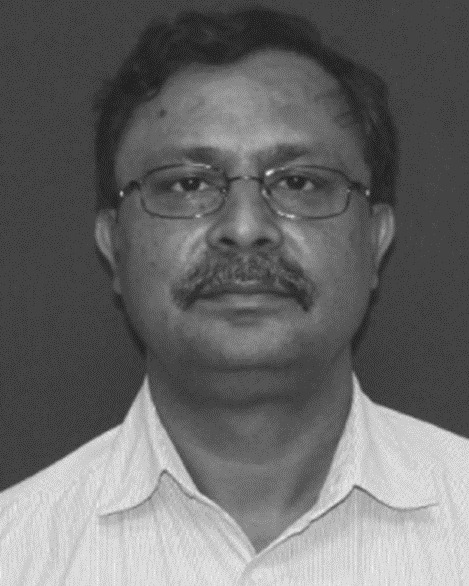
Dr. Debajyoti Dhar
Deputy Director
Space Applications Centre (SAC)
Indian Space Research Organisation (ISRO)
Ahmedabad, India
Application of Computer Vision & AI in Satellite Data Processing
Massive volume of Earth Observation data downlinked from Satellites daily to be processed, corrected and then actionable insights to be extracted in near realtime and without any manual intervention always pose immense challenges. Traditional techniques of remote sensing and image processing including computer graphics algorithms have been utilized in early days for Satellite data pre-processing pipelines.
Subsequently, with the advent of high-performance computing and storage systems and also very high resolution optical and microwave sensors aboard EO Spacecrafts, processing of Satellite images has undergone remarkable transformation both in terms of shift in algorithms and techniques that are being consistently embedded into the processing pipeline.
The presentation primarily focuses on the usage of Computer Vision and Artificial Intelligence techniques that are being engaged to correct some of the interesting observations and phenomena that Remote Sensing images are subjected to. The first part of the presentation depicts the algorithms and methodologies adopted to correct some of the common issues of Satellite images from the domain of Computer Vision and image processing.
It is to be noted that many of these techniques are non-parametric and learnt from the source image itself because firstly there is no provision for manual intervention to tune certain intrinsic parameters and secondly, characteristics of image changes based on season, atmospheric condition and sensor idiosyncrasies.
Later part of the presentation revolves around the application and adaptation of Deep Learning techniques in solve some of the common issues in Satellite images as well as extracting actionable information from the Satellite Images. Most of the models used for these purposes are custom-built models to suit the best for the respective problems. The Satellite images that are used in the presentation are all from the Indian Earth Observation Satellites, built and launched by ISRO.